Mesoamerican Culture, History, and Religion

Latest

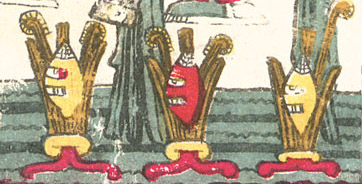
Shield Flowers

I was reading through the ninth volume of the Florentine Codex recently, and came across an interesting tidbit giving more information on some of the flowers offered to Huitzilopochtli.  Even better, Sahagun points out these flowers were offered during Panquetzaliztli!

What flowers am I talking about?  Well, it’s a particular kind of flower called a chimalxochitl, or “shield flower.”  It’s a very large flower that was carried both by celebrants and by bathed slaves who were to be sacrificed to Huitzilopochtli.  As one might guess by the name, it represented a warrior’s shield.  This is particularly fitting, as the bathed slaves who were offered to Huitzilopochtli during Panquetzaliztli were the vaguard merchants’ equivalent of captured warriors.  Instead of capturing them phyiscally on the battlefield, the vaguard merchants, who fulfilled military purposes as well as commercial, captured them with their wealth, which was likened to the spoils of war.  I’ve discovered that these merchants were almost a paramilitary order during the Aztec Empire, something quite fascinating which I will get around to writing about one of these days.

Anyway, back to the flowers.  These shield flowers were carried by worshippers, they were carried by sacrificial victims.  They were strung into garlands which would decorate the temples of Huitzilopochtli, they were placed on the altar, and ornamented the idol sometimes.  They were everywhere during this Teotl’s festivals.

But what were they exactly?  Well, I’ll give you a couple of hints.  They’re huge, bright yellow, and their English and scientific names even reference a certain celestial body associated with Huitzilopochtli…

Give up?

They’re sunflowers!

Yes, sunflowers.  Helianthus annuus to be specific.  At least, the sunflower is the species that’s the top choice for the chimalxochitl among scholars.  Dibble and Anderson identify the flower in footnote 7 on page 34 of their English translation of Book 9: The Merchants, of the Florentine Codex. It pays to read footnotes!

You might be wondering why Huitzilopochtli’s so fond of flowers.  Well, quite a few reasons.  Flowers in general were symbolic of blood and warriors who died in battle.  In Aztec poetry, one frequently encounters descriptions of rains of flowers on the battlefield, indicating the warriors in their bright regalia dashing about like blossoms swaying in the wind, eventually falling like cut plants and watering the earth with their blood.  The dead soldiers would then live forever in Huitzilopochtli’s paradise, the House of the Sun, where they would enjoy the scent and color of beautiful flowers.  Eventually they would be reborn as birds and butterflies, living leisurely lives flitting from flower to flower.

“Flower and song” was a phrase meaning sung poetry, a common pastime of warriors both alive and dead.  The “flowery death” was death on the sacrificial stone, and the “Flower Wars” were ritual battles to capture men for sacrifice.  Finally, the first flowers of the year were reserved for Huitzilopochtli’s mother, Coatlicue, and none might pick or smell them until She had been given some.

Anyway, I thought I would share my discovery and Panquetzaliztli-oriented thoughts on it, in the spirit of the season.
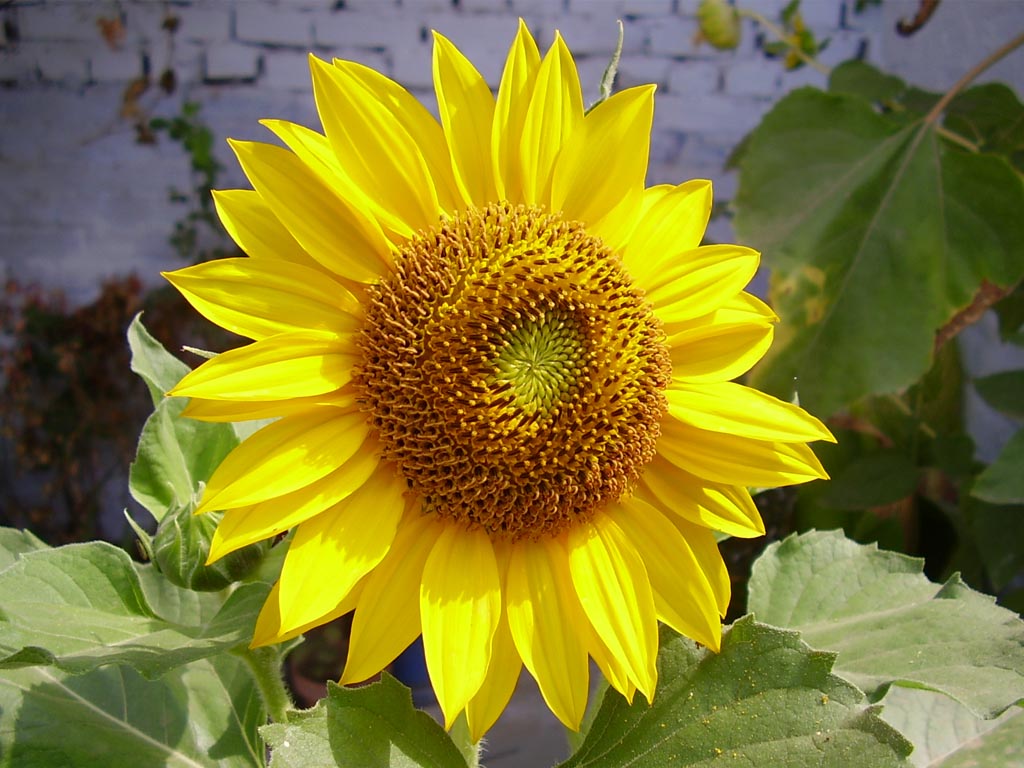
Sunflower

Sunflower

Photo taken by Wajid Uddaim and generously put into the public domain. Thanks Wajid!

First Steps From Aztlan

This is the story of how the Aztecs began as a small band of wild Chichimec nomads and left their original home under the guidance of Huitzilopochtli, searching for their own promised land.  In the epic saga focusing specifically on the rise of the Mexica and Huitzilopochtli, this legend comes after the Battle of Coatepec and before the rebellion of Malinalxochitl.

First Steps From Aztlan

As told by Cehualli

Long ago, after the seven tribes had parted ways at Chicomoztoc, the Place of Seven Caves, the Mexica lived as simple nomads in their homeland of Aztlan.  They were a wild and hardy clan, not yet educated in the sophisticated ways of the Toltecs, but brave and adventurous.  They lived by hunting the wilderness, always on the move in search of new game.  In short, they were Chichimecs, barbarian nomads.

One day, in a year of the Flint Knife, one of the teomama, or priests who carried the sacred bundles, received a vision.  It was the priest who carried Huitzilopochtli’s bundle (tlaquimilloli), the Teotl who was the special protector of the tribe.  Huitzilopochtli told him that He had big plans for them.  “Be bold!  You will travel south to the unknown lands of Anahuac, to a place where your people will found a great empire.  You will be numerous and powerful, feared in war.  You will gather rich tribute, land, slaves, and sacrifices in My name.”

“How can this be?” replied the priest in awe.  “We’re just a small clan of simple nomads, nothing like the mighty Toltecs of wondrous Tollan where Quetzalcoatl once ruled.”

Huitzilopochtli scoffed at his fear with all the bravado of a daring young warrior eager to test his skills.  “Now you are small and weak, but if you follow Me, I will guard and guide you, destroying those who would harm you and leading you to victory.  I promise you a sign when you have reached the right place — you will see an eagle perched on a nopal cactus, eating a heart.  When you find this spot, build My temple there.  Now, take heart and tell My wishes to the chieftains!  I am impatient and long to start the journey!”

As the vision faded and the presence of the god left him, the priest went to tell His charge to the chiefs.  They consulted among themselves and decided to trust Huitzilopochtli, the Protector of Men.  “He’s never led us wrong before,” they said.  “Even though these things seem impossible, we will trust Him and migrate south.  Perhaps we will die, perhaps we will be a glorious empire after all.  We will see!”

They gathered their poor possessions and set out from Aztlan, the White Place, a land to the northwest of the place they would eventually call home, Tenochtitlan.  They were the seventh and youngest tribe to leave, but they would one day become the greatest of all, the Mexica-Tenochca, Aztecs.

Footprints Indicating a Journey, Plate 34 of the Codex Borbonicus

Footprints Indicating a Journey, Plate 34 of the Codex Borbonicus

Happy Panquetzaliztli!

Well, my numerous, intractable, and incredibly frustrating network/Internet connectivity problems resolve just in time for Panquetzaliztli! A lovely coincidence.

Why am I so excited? Panquetzaliztli is Huitzilopochtli’s main festival month, that’s why! I’ve been particularly waiting for this veintana to roll around, as it’s the perfect opportunity for me ramble on about this very special Teotl. I’ve been hoarding research relating to Him just for this month, and will be doing my damndest to pour it out as much as I can, come hell, high water, third-rate cable companies, or exceptionally crappy workweeks. Books have been accumulating tabs like feathers just for this special event…

So… get ready!

To whet your appetite and kick things off on the right (or left?) foot, I would like to draw your attention to the material I have already accumulated on this blog that relates to Huitzilopochtli.

My static page introducing the reader to the god.

A quick intro, a bit about His nature, and a codex image.

Mexicolore’s downloadable feature on Huitzilopochtli.

Includes many artifact photos, pictures from codices, etc. Also includes other interesting tidbits on the god, such as His birthday (1 Flint Knife), his festivals, his sacred animals (the hummingbird and the eagle), and much more. They place Panquetzaliztli a bit later in the year than most calendar correlations I’ve seen, but that’s a minor quirk.

Incarnations of the Aztec Supernatural: The Image of Huitzilopochtli in Mexico and Europe

Elizabeth Hill Boone’s excellent monograph on Huitzilopochtli. The only full-length English study of this particular god available at this time. Full text available to read via Google Books.

The Battle of Coatepec: Huitzilopochtli Defeats the Moon and Stars (As told by Cehualli)

This is my retelling of the important myth about Huitzilopochtli’s birth and how He protected His mother, Coatlicue, from Coyolxauhqui and the Centzon Huitznahua at Coatepec.

Hymns To Huitzilopochtli

Grace Lobanov’s English translation from her Pre-Columbian Literatures of Mexico. The book is still under copyright and so you can’t read the whole thing, but fortunately this particular hymn in its entirety can be reached via Google’s Limited Preview.  This link will take you to the “About This Book” page.  Look for the “Search This Book” box, type in “Huitzilopochtli hymn,” and click on the link to page 65 that it will turn up.  That’s the song for the Portentous One.

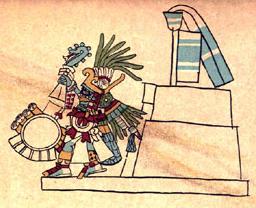
Huitzilopochtli Standing Before A Teocalli

Huitzilopochtli Standing Before A Teocalli

Human Corn

Sitting here at my computer tonight, musing on an important, if not always comfortable, aspect of traditional Aztec thought and its implications. Namely, the concept of “human corn” and the natural humility flowing from that point of view.

“Human Corn” — What Do You Mean?

“Human Corn” — it’s an odd phrase at first glance, especially to those of us raised in a modern, Euro-American society. Boiled down to its essence, it means “people are food.” Food for what? For everything, really. In traditional Aztec thought, humans are food for the gods and food for the Earth.

In his article “Cosmic Jaws,” Dr. David Carrasco notes a saying that survives among some indigenous tribes today in the region, “We eat the Earth, and the Earth eats us.” The Earth was said to have been created from the ever-hungry primordial monster-goddess Cipactli when Quetzalcoatl and Tezcatlipoca, transformed into great serpents, squeezed her in half and created the land and the sky from her remains. In exchange for housing and feeding us, She eats us when we die. When we eat of the land, we literally eat death and begin racking up a debt to Cipactli (later honored with the name Tlaltecuhtli, the Earth Lord) for Her bounty.

Cipactli/Tlaltecuhtli isn’t the only deity depicted as eating people. Most famously, Tonatiuh the Sun received the heart sacrifice as food and drink, and Tlacaelel likened Nahua soldiers to tasty warm tortillas, hot from the griddle, destined for the table of the gods. Numerous prayers and songs, some recorded by Sahagun in Book 6 of the Florentine Codex, describe the sacrificed warrior entering the jaws of Tlaltecuhtli, and praise his blessed state as he goes to feed the cosmos.

Other prayers and huehuetlatolli (moral speeches) explicitly describe humans as corn. During the festival month of Tititl, young plants and young children were stretched to encourage them to grow tall and healthy — and for the same purpose. Youthful warriors were likened to the corn god Centeotl, and the strong linkage between corn/crop and war imagery in Aztec religion has long fascinated and puzzled scholars. (See works by David Carrasco and Kay Almere Read, for example.) Over and over again, we see the idea of “being food” as a central part of the Aztec conception of what it means to be human.

The Implications of “Human Corn”

So, what does it mean to incorporate “being food” into the human identity? Well… it means a very different outlook on our place in the world from what a lot of us were probably raised with. It means we’re not exempt from the natural cycle of eating and being eaten that the natural world runs on, and that this is the ordinary, proper mode of things. It’s no curse or aberration that we’re subject to birth and death, it’s merely part of our nature. It also means we’re not the center of the universe — if the Earth is a garden, we’re a crop planted in it, not the gardener. There’s no analogue to the story of Eden and the Abrahamic view of the dominance of humanity over the natural world here.

It also means humility. If we’re not the capstone of creation, the reason for the whole show, it means we need to get over ourselves. We’re just a part of the greater whole, sometimes likened to a household in traditional Nahua thought. No part is indispensable, from plants to animals, from humans to gods. Every being has its part to play, and that should be honored and acknowledged, but in its proper measure. Perhaps instead of whispering to ourselves, “Remember, thou art mortal!” as the Romans did, we should think, “Remember, thou art corn!” when we’re tempted to hubris.

Finally, it also imparts a certain amount of meaning and purpose to miquiztli (death). When we die, we nourish life and we pay the debt we owe to the Earth for sustaining us. Depending on your understanding of the gods and how the universe works, this can be interpreted in many, many ways as best suits your metaphysical and theological perspective. Whether interpreted poetically, mystically, or literally, the idea of “human corn” still holds valuable meaning in a modern setting.

As a bonus, if you would like to read a bit more about Aztec funeral practices and thoughts on death, I came across a brief article on the subject by David Iguaz that you might enjoy. Click HERE to read it in html, or HERE to download the PDF.

Corn, Plate 27 of the Codex Borgia

Corn, Plate 27 of the Codex Borgia

A Penitential Rite Of The Ancient Mexicans

I have discovered online a very interesting classic journal article about Aztec autosacrifice by the esteemed Dr. Zelia Nuttall. Written in 1904, it lacks the benefits of recent scholarship, but it still remains a keystone work in understanding the specific form of autosacrifice that is bloodletting from the ears. Dr. Nuttall provides detailed description and discussion of the various specific forms of ear sacrifice, accompanied by extensive translation from numerous codices and photographs of pictorial depictions of this type of penance. If you are interested in learning more about how the Aztecs traditionally performed ear sacrifice, I strongly recommend following the link to read the article. Even better, as it is in the public domain, the full text is available to download as a PDF through Google Books!

Click here to go read “A Penitential Rite of the Ancient Mexicans” by Dr. Zelia Nuttall!

Some highlights of this article are discussions of the close association of ear autosacrifice with the gods Tezcatlipoca, Mixcoatl, Huitzilopochtli, and Quetzalcoatl. Of particular interest during this veintana of Quecholli is the description of a special type of autosacrifice attributed to Mixcoatl, the God of the Hunt. The article includes several forms of ear sacrifice linked to specific veintanas, including Quecholli and Panquetzaliztli. Additionally, it describes a sacrifice offered on the day Nahui Ollin, the daysign of the current Sun, the Sun Four Movement.

Also interesting is Dr. Nuttall’s analysis of the jaguar/ocelot imagery surrounding Tezcatlipoca and his connection to the constellation Citlal-Xonecuilli, which is known today as either Ursa Major or Minor (a little help on which one, Shock?).  [Edit — It’s Ursa Major.  Thanks, Shock!]  Instead of a bear, the Aztecs saw the constellation as a jaguar and a symbol of Tezcatlipoca. It reminded them of the time when Tezcatlipoca, acting as the First Sun, was chased from the sky by Quetzalcoatl and descended to Earth in the form of a great jaguar to devour the giants, the first people. That is why the constellation seems to swoop from its peak in the sky down to the horizon, reenacting this myth every day in the night sky.

My only irritation with this article is a few points where the good doctor strays from proper anthropological neutrality to make disparaging comments about the practice of autosacrifice, and to congratulate the Spaniards on stamping it out. I’ll admit it, I do derive a certain sly pleasure in discussing it here so that it’s not forgotten!

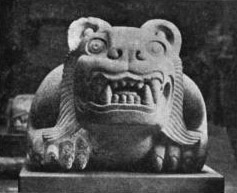
Jaguar Vessel

Jaguar Vessel

The Rise Of The Eagle

One of the core cycles of myth belonging to the Aztecs is the multipart epic of how they went from their humble beginning as an obscure band of nomads to the lords of Tenochtitlan and the founders of a great empire, all under Huitzilopochtli’s watchful eye. In honor of the festival months of Quecholli (beginning today) and Panquetzaliztli, the veintanas celebrating the Chichimec past and the god who led them to glory, I will be kicking off a special storytelling event. Over the course of November and first week of December, I will be retelling the highlights of the series of legends that comprise this important saga of the Mexica-Tenochca people.

The basic timeline of the Foundation Cycle starts with the big entrance of Huitzilopochtli onto the scene with the Battle of Coatepec. I’ve already posted that one, and I recommend checking it out if you haven’t read it yet, as it sets the stage for things to come.

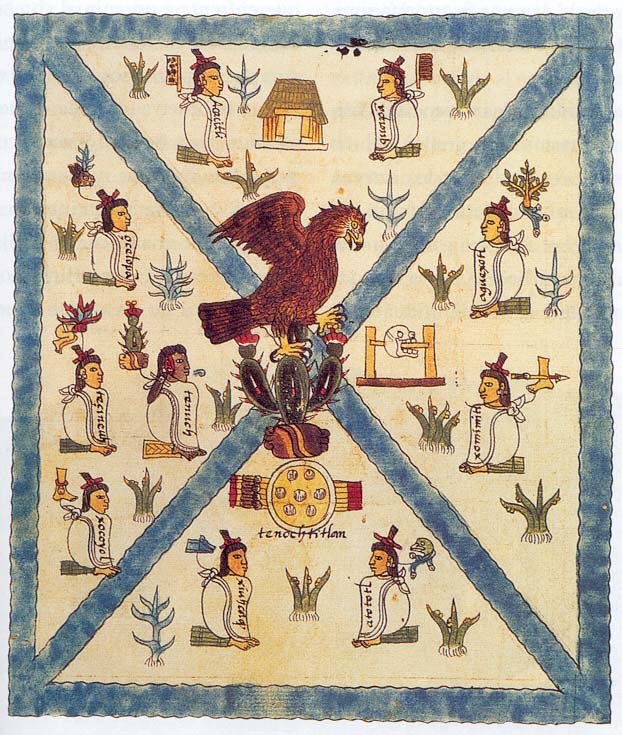
Once Huitzilopochtli’s arrived, He picks out the Mexica as His own favorite tribe and calls them to leave their ancestral homelands in the north and begin their migration south, deep into the Anahuac Valley. He promises to guard them and guide them to a new home, a place where they will found a mighty empire. They trust in Him and head out, overcoming both human and divine opponents until they eventually reach the place where the eagle perches on the nopal cactus, eating a heart — the sign that they have finally found their new home… Tenochtitlan.

Stay tuned!

The Founding of Tenochtitlan, Plate 1 of the Codex Mendoza

The Founding of Tenochtitlan, Plate 1 of the Codex Mendoza

How To Make An Incense Stove

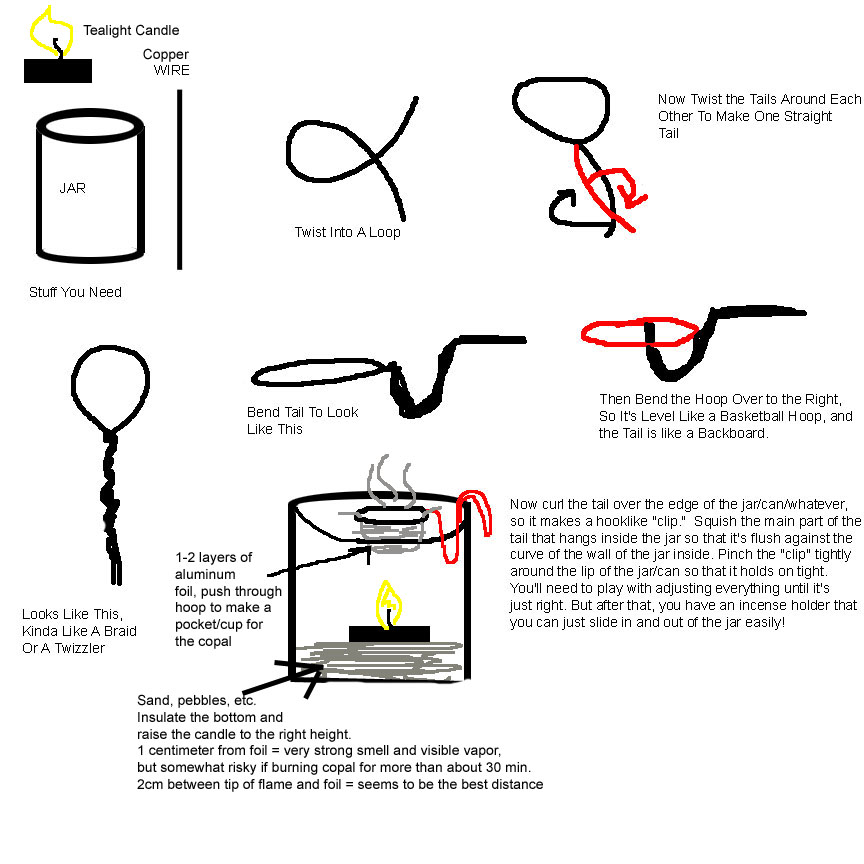
I’m in a “How To” mood tonight. You may have noticed copal comes up a lot on this blog, and been interested in experiencing it yourself, but don’t have a place you can burn it with charcoal due to smoke or fire hazard.  What to do?  Well, I had the same issue myself, and came up with a quick and dirty incense stove design that charcoal-free and smokeless when used. For those who want to give it a try, I thought I’d finally upload photos and some crappy MS Paint blueprints.

Sure, you can buy premade stoves and that guarantees the product doesn’t suck, but they’re not always cheap, and I’ve never seen one that I liked. Building your own can be done for like $5, even less if you are good at scavenging stuff, and you can make it look like you want. Mine is made with a heavy black marble jar that’s quite pretty, and completely hides the jury-rigged wire holder and foil cup hanging inside. When it’s in use, you just see the glow of the hidden candleflame gleaming on the lip, and the incense vapor rising out of the top.

Obligatory Disclaimer/Warning:

Incense stoves get hot and involve fire. This makes them DANGEROUS. Be VERY careful when building and using your stove, as you can burn yourself, your stuff, your pets, etc. if something goes wrong. These blueprints are only a very rough outline of how I built my own stove and are not intended to be professional instructions on how to build incense stoves. There is no associated guarantee of workmanlike quality, fitness for a particular purpose, or safety in either the blueprints or in the end product if you choose to build a stove after looking at these images. It can’t be guaranteed 100% safe, it involves an open flame. Basically, if you start a fire and hurt yourself/others/property, I am not responsible. You’ve been warned.

Materials Needed:

  • 1 Container — This can be a jar, a soup can, basically anything with an open top that won’t burn. Theoretically, you could even just have an open frame made of wire or something that would support the incense cup, though that would be pretty ugly. It needs to be wide enough to hold the candle, and shallow enough to allow enough air to sustain the flame. Remember, copal vapor is heavy and will sink, and it can smother a small flame if it gets trapped densely enough around it.
  • 1 Piece of Wire — A length of thin wire, about 6 inches long. I used copper as it tolerates heat well and was what I had available, though brass would also be an excellent choice. Whatever wire you use, it needs to be flexible enough to easily twist and bend, but strong enough to support its own weight and the weight of a nugget of copal in the foil cup.
  • 1 Sheet of Aluminum Foil — This will be folded into the cup where the resin nugget will go. You’ll want a roughly a 3 inch by 3 inch square if you want to make the cup single-layered, which will maximize the heat transferred to the incense, increasing the strength of the scent.
  • 1 Candle — A small candle, preferably a tealight or votive candle. Must be unscented, or you’ll have its smell dueling with the scent of copal. Disgusting. Need unscented tealights? Check Bed Bath & Beyond, I’ve seen huge bags of 100 for about $5. I’ve seen them in CVS convenience stores here in Boston in the bulk bags too, weirdly enough.
  • Insulating/Supporting Material — Sand, rocks, the shell of a spent tealight candle, anything that won’t burn and can support the weight of a candle on top. You need to put this under the candle both to protect the surface below it from the heat and to adjust the candle’s height.

Blueprints:

Here are the rough diagrams for building an incense stove like mine, with my notes on the process included in the graphic. +1 for crappy MS Paint drawings…

Blueprints -- Click to Expand

Blueprints -- Click to Expand

Photos:

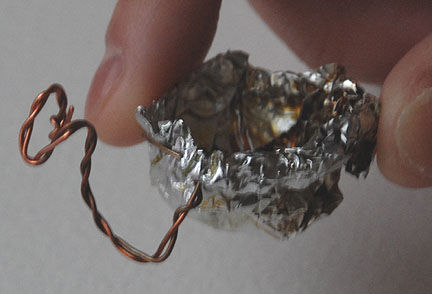
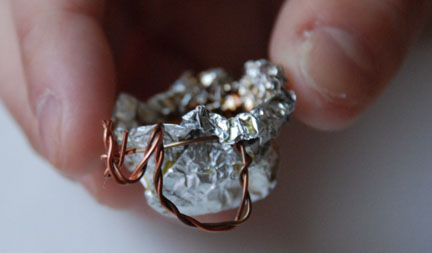
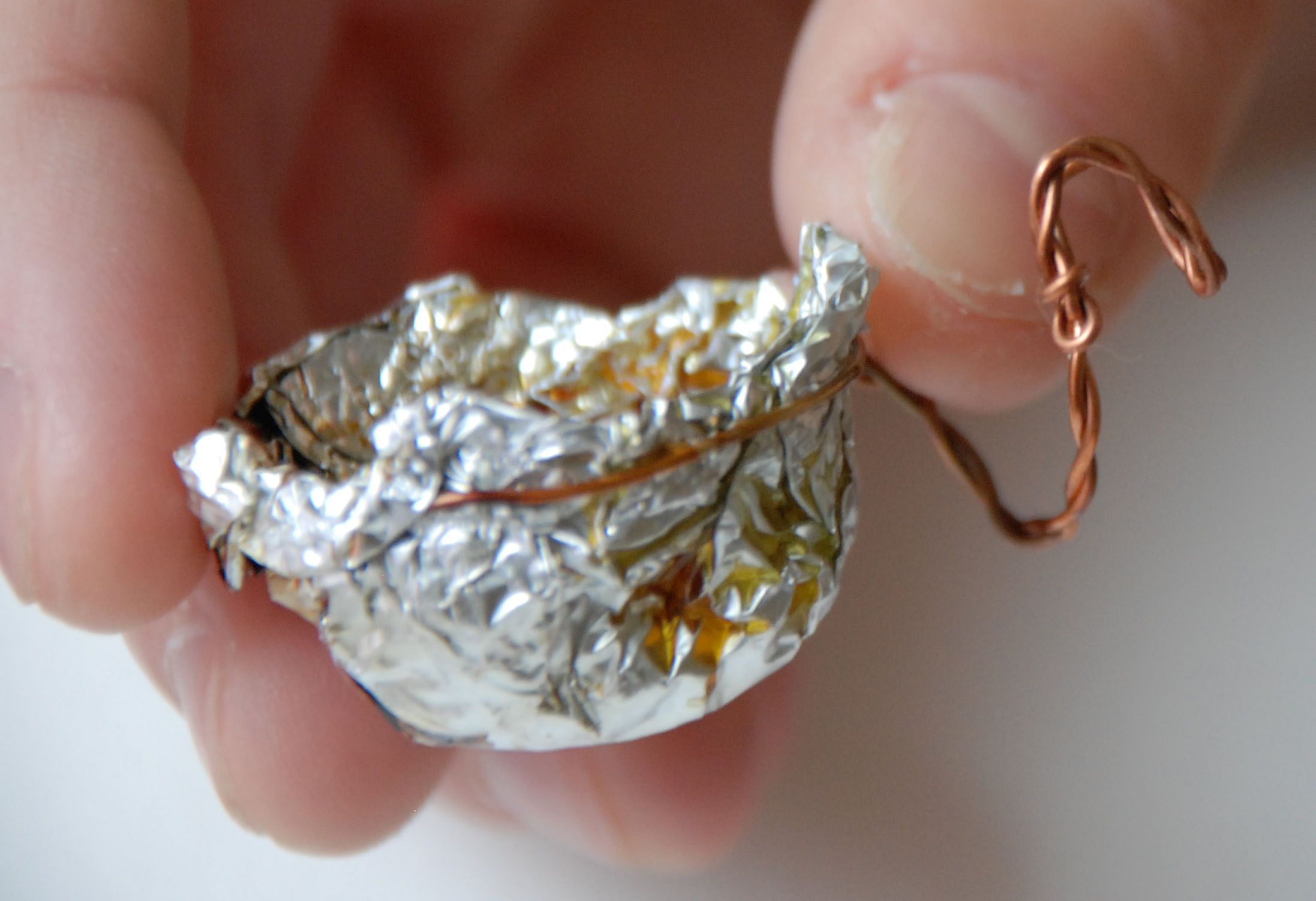
Finally, since making the cup and the wire holder for the cup are the hard part, I’ve included some photos below of my cup and holder in their assembled state. The foil is basically just pushed down through the wire hoop and the edges squished into gripping the wire. Be very careful to hold it up to the light to check for pinholes or cracks, the foil is delicate and tears easily.

Angled Shot of the Cup

Angled Shot of the Cup

Back Shot of the Cup

Back Shot of the Cup

Side Shot of the Cup

Side Shot of the Cup

Danza Azteca: Aguila Blanca

It’s been a while since I’ve posted a dance video, and I have to crash so I can get up for work in the morning, so I think I’ll kill two birds with one stone here. Speaking of birds (and bad puns), I’ve come across a video of the White Eagle Aztec dance (Ixtakcuauhtli in Nahuatl, Aguila Blanca in Spanish) on YouTube. This one is also courtesy of our friends Miguel Rivera and alexeix. Once again his performance is interesting not due to elaborate regalia, but due to the clear demonstration of the steps and drum rhythm, as well as his spirit and agility.

Courtesy link to alexeix’s page on YouTube for this danza video.

As to the meaning of this dance, I’m currently sketchy. I’ve seen it referenced as a warriors’ dance, which would go well with the strenuous acrobatics required and the traditional military symbolism of the eagle in traditional Aztec culture. Unfortunately, I can’t say anything conclusive one way or another at this point. I’ll have to keep looking and post an update when I find more. In the meantime, enjoy the dance!

Study Of A Contemporary Huaxtec Celebration At Postectli

I came across an interesting article by Alan R. Sandstrom on FAMSI the other night. It is a summary of his observation of a modern Huaxtec ceremony honoring one of the Tlaloque, a rain spirit named Apanchanej (literally, “Water Dweller”). This festival took place in 2001 on Postectli, a mountain in the Huasteca region of Mexico.

A bit of background — the Huaxtecs are an ancient people, neighbors of the Aztecs. Like the Aztecs, they spoke and still speak Nahuatl, making them one of the numerous Nahua peoples. To this day they still live in their traditional home, one of the more rugged and mountainous sections of Mexico. They have retained more of their indigenous culture than some of the other nations that survived the Conquest due to their remoteness and the rough terrain that inhibited colonization. This includes many pre-Conquest religious traditions, even some sacrificial practices.

To read the short article summarizing Sandstrom’s experiences at the ceremony:

If you would like to read the article in English, please go HERE.

Si desea leer el artículo en español, por favor haga clic AQUI.

Some Highlights Related To Modern Practices

This article includes discussion of several details of particular interest to those interested in learning from the living practice of traditional religion. Of special note are photographs of the altar at the shrine on Postectli, including explanation of the symbols and objects on it (photograph 12). Also, the practice of creating and honoring sacred paper effigies of the deities involved in the ceremony is explored in some depth. Paper has traditionally been a sacred material among the Nahua tribes, and paper representations of objects in worship is a very old practice indeed. Additionally, there is some detail on tobacco and drink offerings, as well as the use of music and the grueling test of endurance inherent in the extended preparation and performance of this ritual.

Contemporary Animal Sacrifice

A key part of the article’s focus is on the modern practice of animal sacrifice and blood offerings that survive among the Huaxteca today. These forms of worship have by no means been stamped out among the indigenous people of Mexico, as Sandstrom documents. (Yes, there are photographs in case you are wondering — scholarly, not sensationalistic.) Offering turkeys is something that has been done since long before the Conquest, and from what I have read they remain a popular substitute for humans in Mexico. It’s fitting if you know the Nahuatl for turkey — if I remember right, it’s pipil-pipil, which translates to something like “the little nobles” or “the children.” If I’m wrong, someone please correct me, as I don’t have my notes on the Nahuatl for this story handy at the moment. They got that name because in the myth of the Five Suns, the people of one of the earlier Suns were thought to have turned into turkeys when their age ended in a violent cataclysm, and they survive in this form today. I doubt the connection would have been lost on the Aztecs when offering the birds.

Closing Thoughts

To wrap things up, Sandstrom’s article was a lucky find and is a valuable glimpse into modern-day indigenous practice . I strongly recommend stopping by FAMSI and checking it out, as my flyby overview of it can’t possibly contain everything of interest. On one last detail, I strongly encourage you to read the footnotes on this one — a lot more valuable info is hidden in those.

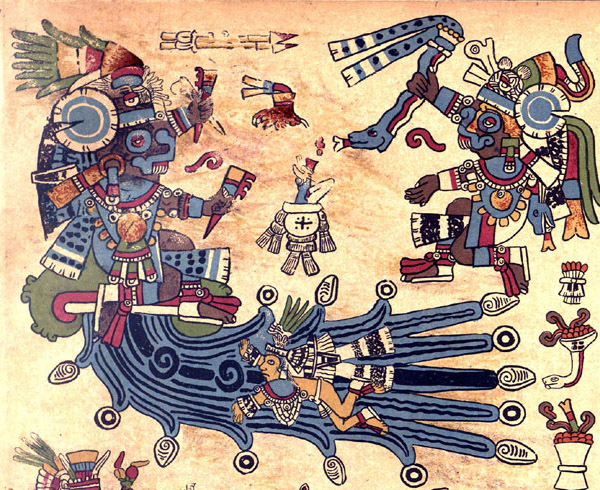
Tlaloc Seated on a Mountain Issuing Water, Plate 7 of the Codex Borbonicus

Tlaloc Seated on a Mountain Issuing Water, Plate 7 of the Codex Borbonicus

Daily Priestly Offerings Of Incense

I feel like talking about the ritual of offering copal incense today. More specifically, I’d like to go into more detail about how the tlamacazqui (priests) used to offer incense each day during the height of the Aztec Empire.

Copal was burned for the Teteo almost constantly in the temples. Sahagun records in Book 2 of the Florentine Codex that the priests would offer incense nine times each day. Four of these times fell during the day, five came at night. The four during the day were when then sun first appeared, at breakfast, at noon, and when the sun was setting. The five times at night were when the sun had fully set, at bedtime, when the conch shell trumpets were blown, at midnight, and shortly before dawn.

Sadly, we don’t have exact clock times for these nine offerings. Granted, some of them, such as the offerings at sunrise and sunset, would’ve drifted with the change in light levels as the seasons passed, while those like noon and midnight would’ve been fixed. The Spanish commentary in Book 7 of the Florentine Codex does state that one of the nighttime offerings was at 10PM. My guess is that one would’ve been either the one that coincided with bedtime or the blowing of the trumpets, as it had to be one of them between sunset and midnight. I would also bet that the offering at full dark is the one where the prayer to greet the night I discussed earlier took place. This would’ve been when the Fire Drill constellation rose into the sky.

Incidentally, it seems that the midnight incense offering was the most important of the nine. Sahagun specifically points out in some places that every priest was to wake at midnight and join in the offering of incense and blood via autosacrifice. This ritual was so important that the most trustworthy of the young priests were given the duty of holding vigil at night and waking their colleagues for this ceremony. Not only that, but those who failed to wake up and join in were punished severely, frequently by additional bloodletting or by a beating. The Aztec priesthood took its duties very seriously, and lapses in function were dealt with harshly.

Furthermore, many of the huehuetlatolli (“ancient words,” or moral discourses) recorded in Book 6 of the Florentine Codex make reference to the midnight offering of incense. The especially devout people, the “friends of Tezcatlipoca,” were dutiful in their observance of this celebration. They’re described as scorning sleep to rise and worship, sighing with longing for the presence of the god and crying out to Him. Judging by these references, it appears that the midnight incense offering was also important to the general nobility as well. Not too surprising, I suppose, as most of the nobility were educated in the calmecac school, the same school that trained the young priests. In a sense, every nobleman did a stint in seminary, though not everyone went on to become professional tlamacazqui.

The incense burner typically used by the priests was ladle-shaped and made of fired clay. The long handle was hollow and filled with pebbles, so it would rattle as the priest would move about. The handle was frequently sculpted to look like a snake, an animal commonly appearing in depictions of sacred things and beings. The hot coals and copal resin would go into the spoon-like cup on the end.

Who exactly received these nine offerings of incense is currently unknown to me. At many points in the Florentine Codex, where an incense offering is described in detail, the Four Directions are noted as receiving the sweet scent and smoke, in addition to any other deities being specifically addressed. Thus, the ladle would be raised to each direction, the prayers of the priest accompanied by the rattling of the stones in the handle. Sahagun notes that some of the nighttime offerings were directed to Yohualtecuhtli, the Lord of Night, and the dawn offering went to Tonatiuh, the Sun. The midnight offering typically shows up in the context of prayers to Tezcatlipoca, at least in the huehuetlatolli I have access to.

A Priest Offers Incense At A Temple, Plate 27 Of The Codex Fejéváry-Mayer

A Priest Offers Incense At A Temple, Plate 27 Of The Codex Fejéváry-Mayer